

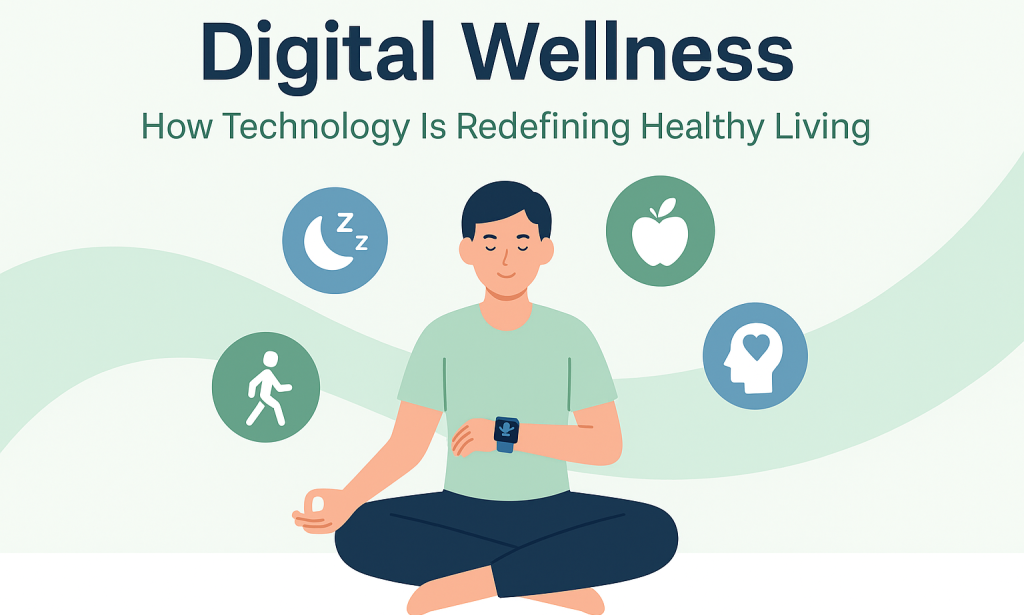


Digital Wellness: How Technology Is Redefining Healthy Living
In the last decade, the way we think about health has shifted dramatically. Wellness is no longer confined to gyms, doctor’s visits, or diet charts—it now lives in the devices we carry and the apps we open daily. This emerging trend, often called digital wellness, is shaping the future of how we eat, sleep, move, and manage stress.
Why Digital Wellness Is on the Rise
Accessibility: Fitness trainers, meditation coaches, and nutritionists are now available anytime through apps and wearables.
Data-driven living: From step counts to sleep scores, people are motivated by visible numbers and progress tracking.
Hybrid lifestyles: Remote and flexible work have blurred health routines, making digital tools essential for accountability.
Transformative Technologies
Smarter Sleep Solutions
Sleep quality directly impacts mental and physical health. Today’s sleep rings, AI-based trackers, and adaptive mattresses don’t just measure hours slept—they identify breathing patterns, restlessness, and recovery scores. This allows users to make actionable changes to their routine.
Micro-Workouts
Research now supports short, high-intensity sessions as effective alternatives to traditional one-hour workouts. Apps are embracing this, offering five- to ten-minute routines that can be done before a meeting or during a lunch break.
AI-Powered Nutrition
Meal-planning apps powered by artificial intelligence are replacing guesswork with personalized recommendations. They adjust to health goals, allergies, and budgets, even generating shopping lists to simplify healthy eating.
Virtual Mental Health Support
Teletherapy has become mainstream, but newer platforms are integrating AI to monitor stress in real time. Some even analyze tone of voice during sessions and recommend calming techniques instantly.
Tips to Build Digital Wellness Into Your Routine
1.Streamline your tools: Avoid app overload. Stick to the two or three platforms you actually use.
2.Focus on one metric: Sleep, steps, or nutrition—choose one to track consistently for 30 days.
3.Turn data into action: Don’t just review numbers—create habits around them, such as evening walks or screen-free wind-down time.
4.Schedule offline moments: Ironically, the healthiest habit may be a digital detox. Set aside one screen-free hour daily.
The Future of Digital Wellness
By 2030, health dashboards are expected to become as standard as financial dashboards. People will check hydration, recovery, stress, and nutrition levels as routinely as they check bank balances.
The opportunity is clear: technology can guide healthier living. But caution is equally important—digital tools should complement, not replace, real medical advice and personal intuition. The balance lies in using technology as an enabler, not a substitute.
Final Thought
Digital wellness is not a fad—it’s the new foundation for proactive, data-informed living. Those who learn to integrate technology wisely into their routines will gain the most long-term benefits.

You must be logged in to post a comment.