

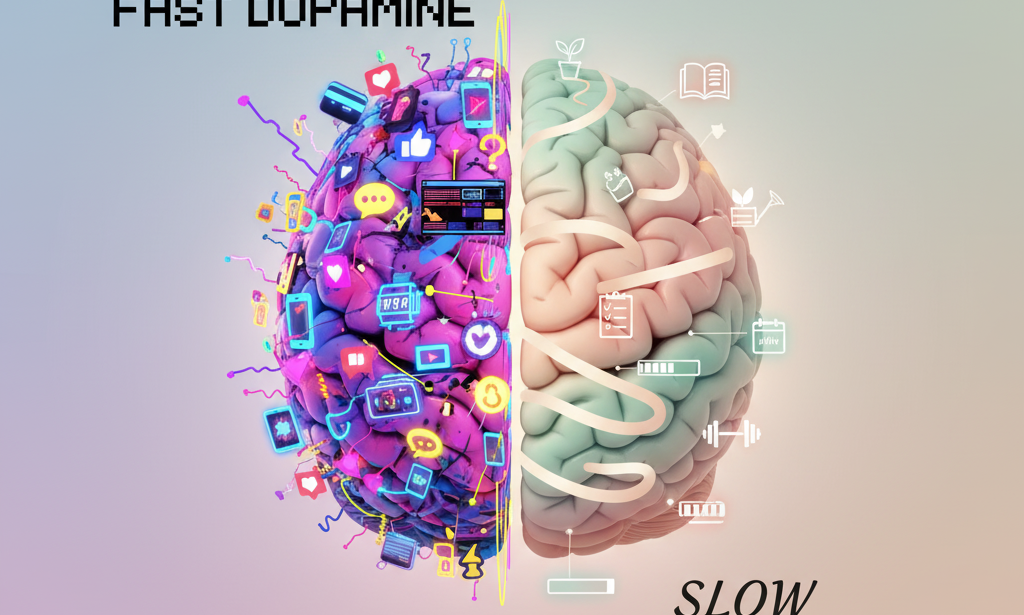

In today’s world, everything is available instantly entertainment, information, connection, and even validation. This constant access creates what psychologists call “fast dopamine,” a quick burst of pleasure that feels good for a few seconds but fades just as quickly. Fast dopamine comes from scrolling reels, binge-watching, checking notifications, snacking for comfort, or jumping from one distraction to another. It gives the brain a temporary high, but the long-term effect is surprisingly the opposite: low motivation, lack of focus, emotional numbness, and difficulty starting real-life tasks.
When the brain receives dopamine too frequently and too quickly, it becomes desensitized. The pleasure centers start demanding more stimulation, but the “reward threshold” goes up. This means small, healthy, slow tasks like studying, working on goals, cleaning your space, exercising, or reading stop feeling rewarding. They require effort, patience, and delayed gratification, something the dopamine-saturated brain is no longer comfortable with. This is where modern motivation problems begin.
Fast dopamine tricks your brain into thinking you are busy, entertained, and satisfied, even though you haven’t achieved anything meaningful. The brain starts preferring easy stimulation over long-term success. Reels feel more rewarding than reading. Checking your phone feels easier than starting a project. Eating junk feels more comforting than cooking a meal. This shift silently trains the brain to avoid anything that takes more than a few minutes of effort. You aren’t lazy your brain is stuck in a loop where pleasure is instant and effort feels painful.
Over time, this cycle changes emotional patterns too. Because fast dopamine is short-lived, it leaves the brain craving another hit, creating restlessness and irritability. People feel bored quickly, lose patience, and struggle to stay present. They may experience brain fog, low self-control, and a sense of “nothing excites me anymore.” These feelings aren’t personality flaws; they are symptoms of an overstimulated reward system.
The biggest impact is on long-term motivation. Motivation is supposed to come from progress, accomplishment, and consistency. But when the brain is conditioned for fast dopamine, slow dopamine activities like learning, building skills, planning goals, or doing productive work stop giving satisfaction. This makes real tasks feel extra heavy and mentally draining. You want to do them, but you can’t start. You try for a few minutes, get frustrated, and return to faster stimulation. The cycle continues, strengthening the imbalance.
Breaking this loop isn’t about quitting dopamine; it’s about balancing it. The brain thrives when it receives a blend of fast and slow rewards. Small adjustments like reducing mindless scrolling, taking dopamine breaks, focusing on one task at a time, or giving yourself tiny wins throughout the day help re-train your reward system. With consistent effort, slow dopamine becomes satisfying again, and motivation naturally increases.
Conclusion
Fast dopamine gives instant pleasure but slowly kills long-term motivation by desensitizing the brain’s reward system. Rebalancing dopamine helps restore focus, discipline, and genuine satisfaction in meaningful tasks.

You must be logged in to post a comment.